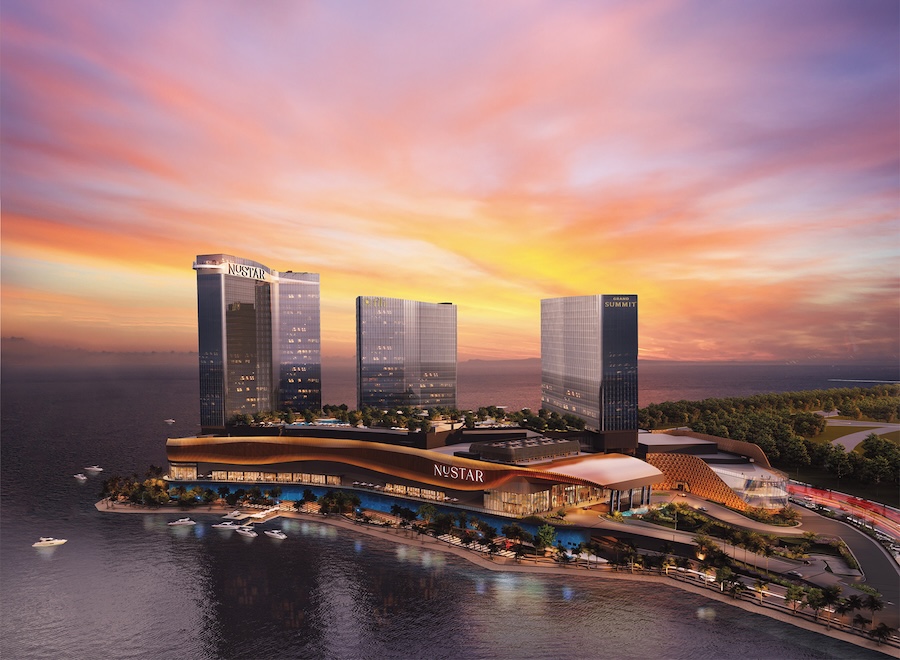
A second integrated resort in Cebu, a 1,700-seat theatre, and a 2027 ramp. We treat the announcement as a supply shock and walk through what that does to drop, hold, and competing-book Manila pricing assumptions.
Read this as a supply-shock event for the Philippine integrated-resort tape — not a stand-alone hotel headline. The number that matters is not the room count or the seat count; it's that Cebu is graduating from a single-IR regional market into a multi-amenity destination, and the new amenity stack arrives in a 2027 window that overlaps the Manila Bay loosening cycle.
Why we model this as a supply shock, not an extension
An incremental hotel tower at an existing IR is normally a refresh, not a shock — it expands room inventory but doesn't change the regional demand curve. A 1,700-seat theatre is the part that flips the framing. Theatres pull non-gaming spend, lengthen visit duration, and crucially attract a different visitor archetype than gaming-first floors do. The asset mix shifts. Theatre + hotel + casino is the canonical Las Vegas Strip stack, and once a region has two operators running that stack, the competitive game changes.
What this means for desk pricing
- Philippine integrated-resort GGR forecasts that treat Cebu as a single-property market under-price the 2027–2029 expansion delta. We'd widen the Cebu-segment confidence interval by 30%+ on the upside.
- Manila Bay premium-mass forecasts should haircut for a 2027 entertainment-substitution effect. Magnitude depends on theatre programming announcements that haven't dropped yet.
- Macau-Cebu route capacity is the under-watched signal. New mainland carriers into MCIA would be the first tangible confirmation that supply is meeting demand. Absence of new slots is the strongest bear case for the Cebu thesis.
- Sportsbook-adjacent: the Philippine offshore book licensing regime sits independent of integrated-resort policy, but a higher-visibility Cebu destination keeps regulatory attention on the broader gaming sector.
Is this a positive or negative read for existing Manila casino operators?
Mixed-negative on the 2027–2029 horizon. Junket VIP relationships are durable enough that Manila is not losing the top of the pyramid. Premium-mass and group-leisure share are the at-risk segments. The operators with the strongest non-gaming programming (theatre, F&B, conferences) are best positioned; the operators most exposed to undifferentiated mid-mass floor revenue are the ones to watch.
What's the single leading indicator you'd track from here?
Mactan-Cebu International Airport monthly throughput, broken out by carrier of origin. If carrier capacity from Tier-1 North Asian gateways does not expand on a 2026–2027 timeline, the supply story underperforms. If it does expand, the second-IR thesis converts from speculative to baseline.
Signals to add to the tape
- MCIA quarterly throughput releases
- Theatre programming calendar from NUSTAR (when published)
- Manila Bay hold-percentage and visitation trend reports
- New mainland-China and Korea carrier slot announcements into MCIA
- Any PAGCOR licensing or tax-regime commentary referencing regional balance
Editorial note. The OddsCipher desk reads casino announcements the same way it reads line moves — as signals embedded in a market with structural assumptions worth testing. Reporting attribution remains with GGRAsia; the supply-shock framing and the modeling implications are ours.